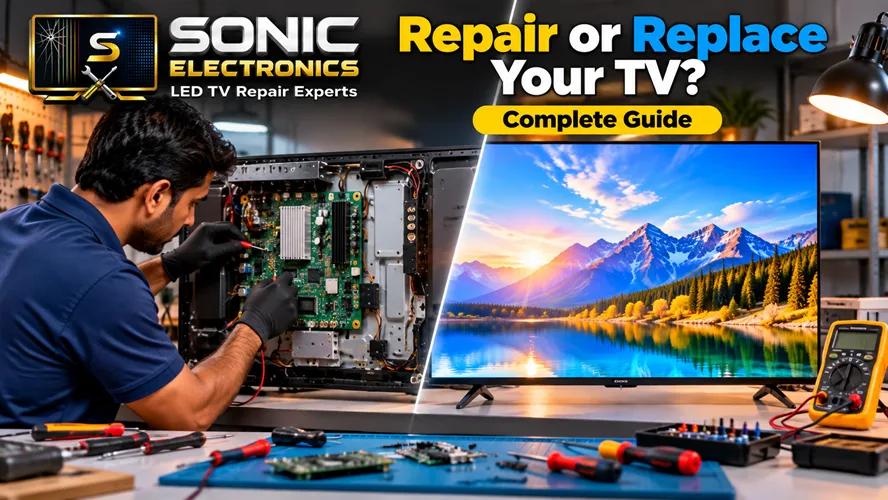
When Should You Repair or Replace Your TV? A Complete Guide
Buying a television is a significant investment, especially when you have a large LED, Smart TV, OLED, or 4K model at home. But like any electronic device, a TV can develop problems over time. You may suddenly notice a black screen, distorted picture, unusual sound, flickering display, power problems, or issues with Smart TV features.
When this happens, one important question comes to mind: Should you repair the TV or replace it with a new one?
The answer depends on several factors, including the age of your television, the type of problem, repair cost, availability of spare parts, picture quality, and the overall condition of the TV. Understanding these factors can help you make a practical decision instead of replacing a television unnecessarily.
Check the TV’s Age First
The age of your TV is one of the first things you should consider. A relatively new television that develops a minor fault may be worth repairing, particularly if it still provides good picture quality and meets your needs.
For example, problems involving the power supply, backlight, speakers, remote, software, HDMI connection, or certain internal components may be repairable without replacing the entire television.
On the other hand, if your TV is quite old and has started developing multiple problems, replacement may become more practical. Older models may also have outdated software, limited connectivity, lower picture quality, or difficulty finding compatible replacement components.
Consider the Type of Problem
Not every TV problem means that you need a new television. Some faults can be repaired relatively easily after proper diagnosis.
Common TV problems include:
- TV not switching on
- Black or blank screen
- Sound but no picture
- Flickering display
- Horizontal or vertical lines
- Dark or dim picture
- No sound or distorted audio
- HDMI or USB connection problems
- Wi-Fi and Smart TV problems
- Remote control issues
- Software or firmware problems
- Backlight failure
For example, a TV that has sound but no picture may have a backlight-related issue rather than a completely failed display. Similarly, software or connectivity problems with a Smart TV may not require any major hardware replacement.
A professional technician can diagnose the actual cause before you spend money on a replacement.
When Repairing Your TV Makes Sense
Repairing your TV can be a sensible option when the fault is limited to a specific component and the rest of the television is working properly.
1. The Picture Quality Is Still Good
If your television produces a clear picture and the panel itself is in good condition, repairing another component may extend its useful life.
2. The Problem Is Relatively Minor
Issues such as power faults, backlight problems, speaker issues, certain motherboard faults, software glitches, or connectivity problems can sometimes be addressed through professional repair.
3. The TV Is Relatively New
If your TV is only a few years old and otherwise performs well, repairing it can avoid the expense of purchasing another television.
4. Replacement Parts Are Available
The availability of suitable parts is another important factor. A professional technician can determine whether the required component can be repaired or replaced.
5. Repair Cost Is Reasonable
Always ask for a diagnosis and estimate before approving the work. Comparing the expected repair cost with the price of a comparable new TV can help you make an informed choice.
When Replacing Your TV May Be More Practical
There are situations where purchasing a new television may make more sense.
1. The Display Panel Is Severely Damaged
A cracked or seriously damaged panel can be one of the more expensive TV problems. Depending on the model, replacing the panel may represent a substantial portion of the television’s value.
2. The TV Has Multiple Major Faults
If the television has power problems, display issues, motherboard faults, and other failures at the same time, repeated repairs can become expensive.
3. The TV Is Very Old
Older televisions may lack modern features such as updated streaming apps, newer HDMI standards, improved display technology, or current Smart TV platforms.
4. Repair Cost Is Close to Replacement Cost
If a repair estimate is approaching the price of a suitable replacement TV, you should compare both options carefully rather than automatically choosing repair.
5. You Need Better Features
Sometimes the television is still working but no longer meets your requirements. If you want a larger display, improved resolution, better sound, gaming features, or a newer Smart TV platform, upgrading may be reasonable.
Repair or Replace: What Should You Check?
Before making a final decision, consider these questions:
How old is the TV?
A newer TV with one repairable fault may deserve attention before replacement.
What exactly is broken?
A backlight, power board, speaker, or software issue is different from severe panel damage.
What is the estimated repair cost?
Get a clear quotation after diagnosis.
Is the display panel healthy?
If the panel is working properly, repairing another component may be worthwhile.
Are replacement parts available?
Parts availability can affect both repair time and cost.
Does the TV still meet your needs?
If the television lacks features you now require, replacement may provide better long-term value.
Why Professional TV Diagnosis Matters
Trying to decide between repair and replacement without knowing the actual fault can lead to unnecessary expenses. A TV may appear to have a serious display problem when the underlying fault is related to the backlight, power board, connections, or another component.
A professional technician can inspect the television, identify the fault, explain the available repair options, and provide an estimate before major work begins.
If you are experiencing problems with your television in Mayur Vihar, you can explore TV Repair Service in Mayur Vihar Delhi for professional TV repair assistance. The service page covers LED, LCD, Smart, OLED, QLED, and 4K TV repair, including common display, power, audio, backlight, motherboard, and connectivity problems.
How to Reduce Future TV Repair Problems
Proper care can help your television remain in good working condition for longer.
Keep the TV in a well-ventilated area and avoid blocking its ventilation openings. Use a suitable surge protector if electrical fluctuations are common in your area. Keep liquids away from the television and clean the screen with appropriate materials.
Avoid repeatedly switching the TV on and off unnecessarily. For Smart TVs, keep software updated when recommended and use reliable internet and power connections.
If you notice unusual lines, flickering, overheating, strange sounds, or repeated shutdowns, don’t ignore the symptoms. Early diagnosis may prevent a minor problem from becoming more complicated.
Final Thoughts
Choosing between TV repair and replacement isn’t always straightforward. The right decision depends on the television’s age, condition, fault, repair cost, parts availability, and your personal requirements.
If the TV is relatively new, the panel is in good condition, and the problem is limited to a repairable component, professional repair may be worth considering. If the television is very old, has several major faults, has severe panel damage, or requires expensive repairs, comparing the cost of replacement may be more practical.
The most important step is to diagnose the problem before making a decision. A professional inspection can give you a clearer idea of what has failed and whether repairing the television is a sensible option.
Frequently Asked Questions (FAQs)
1. How do I know whether my TV needs repair or replacement?
Start by identifying the actual problem and checking the age and overall condition of the TV. If the television is relatively new and has a single repairable issue, repair may be worth considering. If it is very old or has multiple major faults, compare the repair estimate with the cost of buying a comparable new TV.
2. Is it worth repairing an LED TV?
An LED TV can be worth repairing when the problem involves a component such as the power supply, backlight, audio system, or certain internal boards and the display panel remains in good condition. A technician should diagnose the fault and provide an estimate before you decide.
3. Should I repair a TV with sound but no picture?
A TV with sound but no picture does not necessarily need to be replaced. The problem can sometimes be related to the backlight or another display-related component. Professional diagnosis is recommended before purchasing a new television.
4. Is a cracked TV screen worth repairing?
It depends on the TV model, screen size, panel availability, and replacement cost. Panel replacement can be expensive, so it is important to compare the repair quotation with the current price of a similar new TV.
5. How long can a repaired TV last?
The lifespan after repair depends on the original fault, the condition of other components, the quality of the repair, and how the TV is used. A properly diagnosed and professionally repaired television can continue working for a significant period when the remaining components are in good condition.
6. Can Smart TV problems be repaired?
Yes, many Smart TV problems can be addressed through software troubleshooting, settings changes, network configuration, firmware updates, or hardware repair. Problems such as Wi-Fi connectivity, app issues, remote pairing, and system errors should be diagnosed before assuming that the TV needs replacement.
7. Should I get a second opinion before replacing my TV?
If a repair appears expensive or you are unsure about the diagnosis, getting another professional opinion can help you understand your options. Ask for a clear explanation of the fault and an itemized repair estimate before making a final decision.
8. Can regular TV maintenance reduce repair problems?
Regular maintenance can help reduce avoidable problems. Keep ventilation areas clear, protect the TV from power fluctuations, prevent liquid exposure, clean the screen correctly, and address unusual symptoms early. Good maintenance can help keep the television functioning properly for longer.